

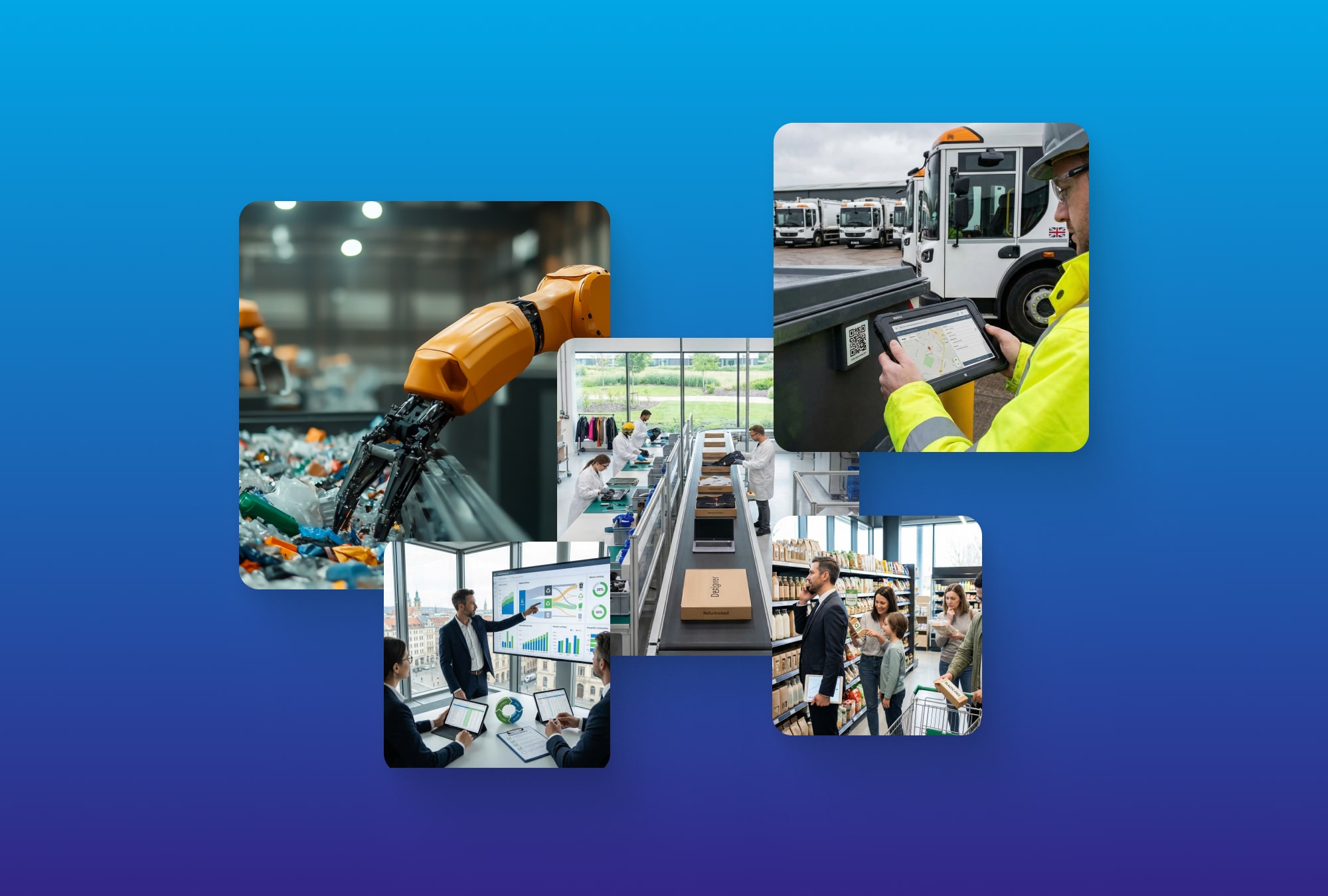

In 2026, waste management is no longer a behind-the-scenes operational task. The waste management trends defining 2026 have elevated waste into a core business consideration, shaping ESG performance, regulatory compliance, and even revenue strategy.
What has changed most is expectation. Businesses are now measured not only on intent, but on evidence. Data must be accurate, systems must be traceable, and results must be visible. Organisations that recognised this early are now operating with clarity and confidence, while others are scrambling to modernise outdated processes.
Below are the waste management trends actively shaping how businesses operate in 2026.
1. AI, IoT and Automation Are Now Mainstream
One of the most visible waste management trends in 2026 is the mainstream adoption of AI, IoT, and automation across waste operations.
Smart sensors, connected scales, QR-based tracking, and mobile data capture have become standard tools for monitoring waste at source. AI-driven analytics are increasingly used to identify contamination risks, predict waste volumes, and highlight inefficiencies before they escalate into operational problems.
This shift has reduced manual intervention, improved data accuracy, and given businesses real-time visibility into waste performance across sites. In 2026, automation is no longer experimental — it is foundational.

2. Producer Responsibility Is Scaling Fast
Extended Producer Responsibility has moved beyond policy discussion and into practical implementation. In 2026, EPR schemes are scaling rapidly, reshaping how packaging, materials, and end-of-life accountability are managed.
For many businesses, this has expanded the scope of waste management far beyond the waste area. Procurement teams, suppliers, and product designers are now directly involved in waste strategy, driven by cost exposure and compliance risk.
As producer responsibility scales, accurate material tracking and transparent reporting have become essential for managing obligations and controlling long-term costs.

3. Investors and Customers Are Watching Closely
Another defining waste management trend of 2026 is heightened external scrutiny. Investors, customers, and partners are paying closer attention to how businesses manage waste and how credibly they report on it.
Sustainability claims are increasingly tested against data. Inconsistent figures, vague reporting, or unverifiable diversion rates undermine trust and raise concerns around governance and greenwashing.
In response, businesses are prioritising verified, auditable waste data that can stand up to scrutiny. Waste performance is no longer just an internal metric — it is a signal of credibility in the market.

4. Waste Reduction Has Become a Revenue and Cost Strategy
In 2026, waste reduction is no longer framed purely as an environmental goal. It is increasingly treated as a financial lever.
Detailed waste data is being used to identify material losses, inefficiencies, and opportunities for reuse or recovery. For many organisations, this has unlocked cost savings through reduced disposal fees, improved procurement decisions, and better contract management.
In some cases, waste streams themselves are being reclassified as recoverable resources, contributing to revenue through resale or alternative treatment pathways. This shift has reframed waste management as a value-creating function rather than a sunk cost.

5. Waste Reporting Is Digital — and Effectively Mandatory
Digital waste reporting has become the norm in 2026. Manual reports, emailed spreadsheets, and disconnected contractor summaries no longer meet business or regulatory expectations.
Centralised digital platforms now consolidate waste data across sites, service providers, and waste streams, providing a single source of truth. These systems support ESG reporting, compliance documentation, and internal performance tracking with far less administrative burden.
While reporting requirements vary by region, the direction is clear. In 2026, digital waste reporting is effectively mandatory for businesses that want to remain compliant, credible, and competitive.

What These Waste Management Trends Mean for Businesses in 2026
Together, these waste management trends point to a clear reality: waste management has become a strategic business discipline.
Organisations performing well in 2026 share common traits:
-
They rely on automated, technology-enabled systems
-
They track waste with accuracy and transparency
-
They integrate waste insights into financial and sustainability decisions
Those still operating with fragmented data and manual processes are finding it harder to keep up with reporting demands, stakeholder expectations, and rising costs.
Navigating Waste Management in 2026
The waste management trends shaping 2026 reflect a broader shift toward accountability, visibility, and measurable performance. Businesses that adapt are not only meeting requirements — they are gaining operational clarity and strategic advantage.
In today’s landscape, effective waste management is no longer reactive. It is structured, data-driven, and embedded into how organisations operate and report.
Ready to see how your waste strategy aligns with today’s expectations?
Explore how integrated technology, verified data, and operational expertise can support confident waste management in 2026.

